Latest News
October 3rd, 2026 - Latest Pressure Test Successful
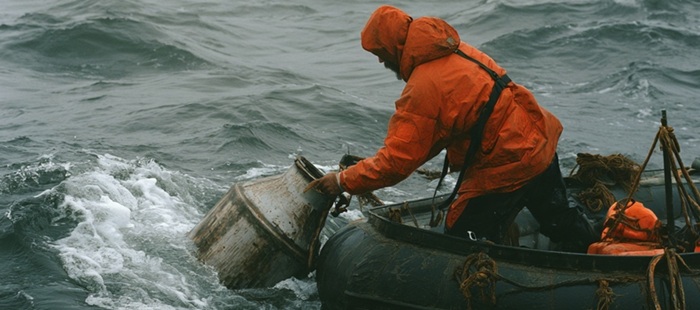
On the 2nd of October, Moray Naval Engineering successfully completed a pressure test of one of its remotely operated underwater vehicles off the coast of Westkapelle, the Netherlands. The test validated the vehicle’s pressure integrity and performance under demanding subsea conditions, marking an important milestone in its development and readiness for future operations.
Despite inclement weather, the ROV body was sent to a depth of approximately 1200m using a weighted sled and returned to the surface via winch. The ROV body sustained no stress fracturing of the titanium body or reinforced camera window, and no signs of water ingress were found after a post-test inspection.
This is an exciting start of a new phase for the development of our new Anglerfish deep-sea ROV platform. With our engineering simulations validated by the successful pressure test, we believe that a powered test dive with assisted recovery is possible before the end of 2026.
September 7th, 2026 - New Anglerfish ROV Body
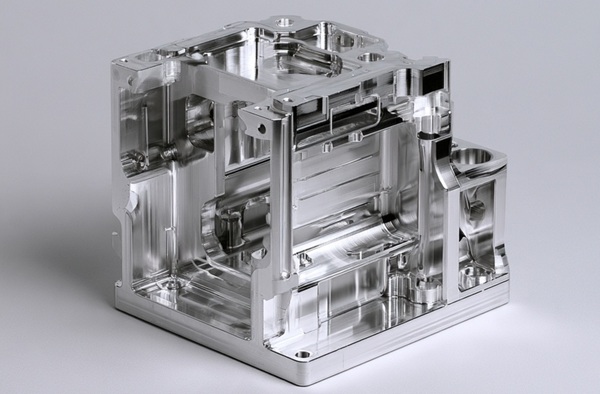
We're happy to announce that the frame for the new Anglerfish ROV has arrived from the machinist. This solid Titanium frame measures only 25cm x 35cm x 30cm and weighs just 300g, thanks to a internal skeletonization process made possibly by precision electro-discharge machining.
This prototype frame is the culmination of more than 8 months of modelling, drafting, and simulating chassis designs and is Moray Naval Engineering's most complex chassis design to date. When complete, it will offer a modular, deep-sea ROV (maximum service depth: 1500m) capable of being outfitted for a wide variety of tasks, ranging from underwater welding to mine clearance and ship salvage operations.
We expect initial tests on the prototype frame to begin within the next month.
August 24th, 2026 - Moray Naval Engineering Receives €1M Research Grant
Moray Naval Engineering is happy to announce that we have qualified for a €1M research grant from the European Union Commission on Maritime Search and Salvage (EUCMSS), in partnership with the Participatiemaatschappij Vlaanderen (PMV). This grant money will be used to help fund the development of a new generation of European-developed deep-sea ROVs, made right here in Belgium.
This grant represents a major opportunity for Moray Naval, and we are beyond excited to have been chosen for this funding. We applaud the European Union for its forward thinking approach to funding technological and military development at this critical juncture.
June 19th, 2026 - ASV 2 Makes 50km Journey
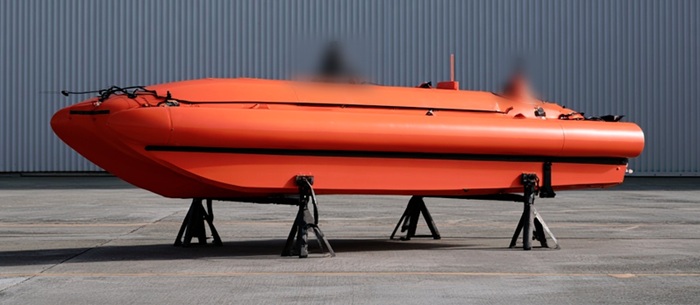
Yesterday, the Autonomous Surface Vehicle 2 (ASV 2) made its maiden voyage off the coast of Blankenberge, Belgium. Using fully autonomous control, ASV 2 sailed from Blankenberge to the coast of Zwin Natuur park and back, on a journey of more than 50km without human intervention.
During the voyage several ASV 2 systems were tested, including the navigation, communication, and sensor subsystems. Despite windy conditions, ASV 2 maintained an average speed of 22km/h (11.9kn) and drift under satellite navigation of <100m from the initially planned route. With satellite navigation intentionally disabled, the onboard inertial navigation system maintained a drift of <500m from the initially planned route.
The auxiliary instrument capability of ASV 2 was also tested, towing a high frequency sidescan sonar and magnetometer sensor for the duration of the trip. The route passed over the wreck of the SS Samselbu at a depth of approximately 15m, providing very clear sonar modelling of the wreck. The auxiliary instrument capability will allow ASV 2 to be used with a variety of tow-behind sensor packages.
Following a successful test mission, Moray Naval Engineering safely recovered ASV 2. The recovery operation demonstrated the team’s ability to manage the vehicle through the final stages of a mission and return it securely for inspection, analysis, and further testing. We look forward to sharing more of the data as we go through the post-testing process.