Models and Prototypes
Autonomous Surface Vessel (ASV) 1
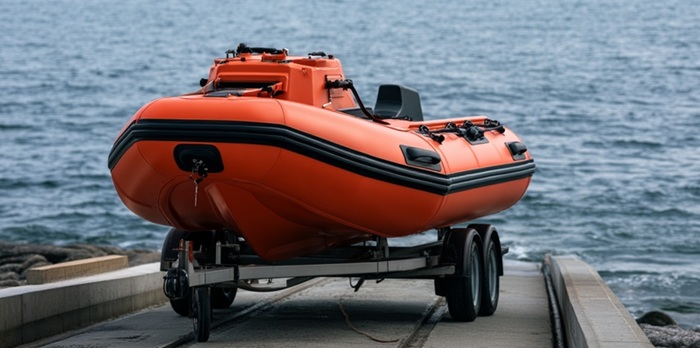
ASV 1 marked Moray Naval Engineering’s first foray into autonomous maritime vehicles, and was developed in 2022. Built around a standard inflatable boat, the prototype was adapted with electric propulsion and automated steering, providing a practical platform for exploring the challenges of autonomous navigation and remote operation on the water. The project gave the team valuable hands-on experience integrating propulsion, control systems, sensors, and autonomy into a working marine platform..
Development of ASV 1 focused on creating a reliable and controllable system capable of operating with minimal human intervention. The prototype underwent a series of trials to evaluate its electric propulsion, steering, communications, and autonomous control systems. Each test provided new insights into the behaviour of the vessel in real-world conditions and helped Moray refine its approach to designing autonomous surface vehicles.
As testing progressed, ASV 1 became an important technology demonstrator for Moray. The prototype allowed the team to identify engineering challenges that are difficult to replicate in a laboratory environment, from vessel handling and power management to the interaction between software and hardware at sea. These lessons helped establish the foundations for the company’s subsequent work on more capable autonomous surface vessels.
The ASV 1 programme ultimately came to an unexpected end when the prototype was lost following a battery fire that led to the vessel sinking in approximately 10m of water off the coast of Blankenberge. ASV 1 was recovered, but in an irrepairable state. While the loss was a setback, the experience provided important engineering and operational lessons about energy systems, safety, and risk management in autonomous marine platforms. ASV 1 remains an important part of Moray’s development story—a first step that helped shape the systems and expertise behind the company’s next generation of maritime robotics.
Autonomous Surface Vessel (ASV) 2
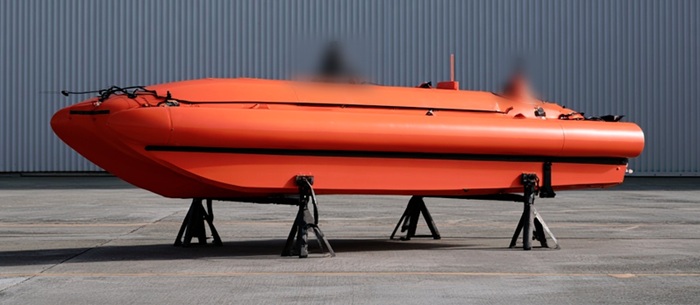
Building on the experience gained with ASV 1, ASV 2 represents a significant step forward in Moray Naval Engineering’s autonomous surface vessel programme. Developed with a larger, purpose-built fibreglass hull, ASV 2 provides a more capable and robust platform for integrating the propulsion, navigation, communications, and autonomous control technologies required for extended operations at sea. Initial laydown of the fibreglass hull began in the summer of 2024 and outfitting was completed by December of 2025.
The development of ASV 2 incorporated lessons learned from the first prototype, with a focus on improving reliability, endurance, handling, and overall system integration. Its larger platform provides greater scope for equipment and payloads while offering a stable foundation for the continued development of Moray’s autonomous navigation capabilities.
A recent test demonstrated the vessel’s growing operational capability, with ASV 2 successfully completing a 50-kilometre autonomous navigation trial. The test provided an opportunity to evaluate the vessel over an extended route and assess the performance of its navigation and control systems throughout the mission. Successful completion of the trial represents an important milestone in the programme.
The 50-kilometre test marks a significant progression from Moray’s early autonomous prototypes and demonstrates the potential of its surface vessel technology for longer-range maritime operations. With continued testing and development, ASV 2 provides a platform for advancing Moray’s autonomous capabilities and moving toward increasingly demanding real-world missions.
Anglerfish ROV
The Anglerfish ROV marks Moray Naval's entrance into the deep-sea ROV market. It is designed to be an extremely compact ROV with the option of short-duration, untethered operation via onboard batteries. It is designed with a maximum service depth of 1500m, making it a capable tool for ocean floor exploration, wreck inspection, and undersea cable maintenance.
Anglerfish is currently in the early prototype phase, with the chassis having been developed and awaiting testing. The Anglerfish design has been extensively tested via simulation with a comfortable safety margin and we are very confident in the results of these future tests.
The development of the Anglerfish ROV is aimed at civilian, police, and military markets wherever a compact deep-water ROV is required, including but not limited to: shipwreck exploration, underwater biological surveys, mine detection and demining tasks, underwater welding, and underwater cable laying applications.